TIRANA - Entry into the market of domestic production has decreased somewhat vegetable prices in the country. For three months, the price of tomatoes, cucumbers, peppers, green salad, etc.., were in maximum increasing further the cost of living in the country. It seems that this phenomenon is stopped when trader’s stalls are filled with local products which are normally sold at cheaper prices.
Showing posts with label Economy. Show all posts
Local products entry to the market lowers the price of vegetables.
TIRANA - Entry into the market of domestic production has decreased somewhat vegetable prices in the country. For three months, the price of tomatoes, cucumbers, peppers, green salad, etc.., were in maximum increasing further the cost of living in the country. It seems that this phenomenon is stopped when trader’s stalls are filled with local products which are normally sold at cheaper prices.
Sigal Holding demonstrates strong growth & performance in 2009
Elina Demai, ALBANIAN TIMES
Although year 2009 was a difficult year for the world economy and therefore also for the Albanian economy, it appears that Sigal Holding, which operates in Albania, Kosovo & Macedonia, has managed to escape the decline in markets and perform higher than expectations. SIGAL Holding which is an insurance company grew by over 21% in 2009 grew by 21 percent. At the AGM, attended by Director General, Mr Avni Ponari & also directors of departments and branches of SIGAL uniq GROUP AUSTRIA Albania (Non-Life), Life uniq SIGAL Austria Group (Life), uniq ad Skopje (Non-Life) and SIGAL uniq GROUP AUSTRIA Kosovo (Non-Life), performance in 2009 was analysed. Premiums increased by approximately €32 million. This increase has occurred in three markets of three states, in Albania, Kosovo and Macedonia
Albania Dodges Recession & Forecasts Further Economic Growth in 2010
Elina Demai, ALBANIAN TIMES
The Minister for Economy, Trade and Energy, Mr. Dritan Prifti, said yesterday that Albania will be the country with the highest economic growth in Europe in 2010. The minister, who was attending a ceremony in Veneto bank, also attended by other members of government, business representatives, and representatives of the banking group Veneto, spoke of how Albania was the country with highest economic growth in 2009 and how it is expected to be even higher in 2010, in the region of 4 - 5%. Growth was 3% in 2009. He added 'Albania is a country that grows.'
Advances in the Telephony Market mean Savings for Customers
Elina Demai, ALBANIAN TIMES
Increased competition in the mobile telephony market in Albania, as a result of regulatory requirement for reduction of tariffs, has brought visible benefits to the customer. These benefits for clients of cellular companies in the country have been estimated in the region of 35 million euro by the Authority of Electronic & Postal Communication (Autoritetit ne Komunikimin Elektronik dhe Postar). Selami Xhepa has commented that mobile tariffs in Albania are now below the European average. As a result of the decrease in tariffs, AKEP has determined an increase in outgoing calls by customers from 30 to 60 minutes compared to previous years.
Berisha: Future budget to concentrate on major projects
Erind Kurti, ALBANIAN TIMES

Albanian Premier, Sali Berisha, said that next year budget is going to be concentrated on some important projects and is not going to be divided in pieces, as has been the rule in the past. Albanian Premier considered this practice as a wrong one. “Next year budget will concentrate on major projects and will not be distributed in 1800 projects, as has been the practice on the past.
First steps to a new Southern Motorway - Tirana to Elbasan
Elina Demai, ALBANIAN TIMES
A new stretch of highway, running from the capital of Albania, Tirana, to Elbasan, further south, has been presented and is expected to be completed within two years. The first phase of this project will see a new highway stretching approximately 31km, consisting of 4 lanes, with two tunnels extending 2.3 and 2.1 miles being constructed between these two cities, with further stages planned to extend the motorway to Berat and Tepelene.
Greek crisis enters Albania
March 03, 2010| Elina Demai, ALBANIAN TIMES
Greek economy crisis is entering in Albania. Found unemployed in Greece emigration is returning back home increasing the numbers of unemployed in the live registers in Albania.
The crashed economy in Greece has now entered Albania and if the Greek tourism which employs 500 000 Albanians, doesn’t pick up quickly the number of unemployment in Albania could rise at all time high. Albanian government is taking all the necessary steps to accommodate those returned from Greece in the tourism sector whilst they bring the experience back home but the number entering every day is much higher then Albania can afford at this time in the tourism sector.
Tourism is now contracting at high with the season preparations but how long is the this going to continue is the question!? How many Albanians will come back is what everyone is asking? Will this have an effect on the 8% growth in Albanian economy that was published at the beginning of the year?
No one can answer those questions but what the government is saying that visitors entering Albania is doubling every year, this will create jobs. At the moment sector of tourism alone employs 350 000 and this will increase to 500 000.
The sector of agriculture is the second largest which employs 400 000 Albanians in Greece and this has been hit the hardest. The reason this has been hit the hardest is that Greek banks are low on capital and loans are hard to get hands on. This has caused businesses and factories shutting down and imports/exports crashing at the bottom with no money in their hands to do business. Greek banks are using the money wisely, at least that little that is left! Economist Andrea Papagalis told Albanian Times: If a loan is given in agriculture sector another is needed in the exporting that product to the consumer, there is not enough money for both! either we produce the tomato or transport the tomato!
The Greek government has announced there will be cuts in civil servants' salaries. This is to ease the financial crisis facing the country but will also mean that people will have less money to spend and this will effect every business and hit the economy even worse overall. If a couple is working in the school they will get a cut of about 10% which means 20% less income in the in the family! Well they afford to go on holidays? Will this effect tourism!? We don't have the answer to that but you can guess!
Albanians who have worked in agriculture in Greece returning back home could find it easier to get employment. Albanian banks had a growth even at the year the banking system collapsed worldwide. Albanian bank have plenty of capital for country's businesses and whilst the economy is on the growth is very easily to secure a loan at a low rate. The government has introduced the tax for unused farm land and this should create jobs for those returning from Greece and bring home the experience gained working in agriculture in Greece. The government has also introduced loans at 0% rates used for agriculture and this sector is forecast to double the product from last year.
The government of Albania has taken all the right steps but the number of Albanians working and living in Greece is 1 200 000 and if half of those returned back home Albanian unemployment registers could hit the roof!
Albania is developing and the economy is on rise. Agriculture and tourism are the two sectors on the rise contracting the double from year on year but is that enough. Albania is not well developed country and with half a million on the registers the unemployment could have an effect in the growth forecasted for 2010.
Tourism in Albania is doing all it can to promote the country, millions are being pumped in to make sure that Albania represents itself in every international forum and makes itself competitor to other Mediterranean countries. TV advertisements about “Europe’s Last Secret” and “Mediterranean Love” Albania, are promoting the country in most prestigious TV channels such as BBC, EuroNews and CNN. This will increase the number of visitors entering Albania which is making itself competitor to the neighbouring countries but will this employ everyone returning from Greece? This remain to be seen!
Albanian economy is on a growth of 5-9% year on year and this is not showing a sign of slow down. Albania was not affected in the 2008 bank crisis and it took all the mandatory steps in preventing a crash in the banking sector.
The director of Bank of Albania Adrian Fullani, declared yesterday that from today the currency of the secondary (arm) banks transferring funds outside Albania is open whilst this was stopped in 2008 caused by the unrest in the world markets and banks loosing big in shares.
Banking Crisis:
In the banking sector in Albania 38% is connected to greek banking system as the secondary banks. Whilst Greek economy is at the edge of disaster the luck of those banks in the hands of Athens! Although Tirana bank, subsidiary of Pireus bank had a growth of 6% last year it has seen job cuts in attempt of cost saving plan.
Business Crisis:
Albanian business has seen a slow down in exports to Greece. Businessman Koço Qirjako whose company exports Mermer tiles and stones to Greece has seen a decline by 40% in exports. He says he is looking into different markets to get rid of the storage he has piled up in the warehouse as he doesn’t see the end of the tunnel in the Greek market. Pallets of tiles are stock on my warehouse and there is no more room for storage but I have no choice but stop production and to pay my employees for staying home. I have 6 months worth of exports piled in my warehouses and I have no where to sell it he says. I have been contacting different markets to get rid of my storage as there is no hope in Greek market to pick anytime soon. Times are tough at the moment and the Greek imports in general have dropped by 40%.
Reportage on Albania showed in CNN and BCC:
All eyes on tourism in Albania:
CNN:
CNN:
EuroNews:
BBC:
Unused farm land now to be taxed in Albania
February 20, 2010 | Altin Zeqiri - Albanian Times
The Government of Albania is introducing a tax for fallow land. The message from the government to the farmers is that If the farm land is not used then it can be rented to someone who can make a use of it and if it is not rented then it will be taxed.
Albania: 8.9% GDP Increase
Erind Kurti – Albanian Times
International institutions are optimists with the forecasts of strong growth in 2010 for Albanian economy.
Unicredit Banks research team has forecasted an increase of 8.9% GDP for 2010 with an increase in investments in finance and assets. Further in the report shows an increase in the economy overall and Albanian products increasing in exports.
Albania has hit the record in exports of energy this winter with the heavy rains helping it’s hydro-central stations whilst all of its energy comes from the hydro-central stations whilst many companies are investing in energy sector in Albania and talks are still ongoing between companies and government on building nuclear energy stations.
Shkoder, a city in the north of Albania has its plan drawn for the nuclear station being built and waiting for the go-ahead green light whilst another one is on the way in city of Durres which will be used mainly for export to Italy via underwater link between Albania and Italy in the Adriatic Sea.
Albania is a great place for investment and is one of very few places that is not affected by recession and it had a growth of 5% in 2009 and with forecasts of 8% growth in 2010.
Albanian food and drink products have increased in 2009 and will hit a record high in 2010 which is being helped by the new motorway that was build in 2009 linking Albania’s capital Tirana with Prishtina, Kosova.
Albanian food and drink products are now being exported in Kosova and this is helping Albanians on keeping the prices at the same level for the whole season whilst in the previous years a kg of tomatoes in April was a 1€ whilst you could get it for only 5 cents in July and August. With the new motorway a kg of tomatoes is expected at 1€ from start to end of season. With investments in agriculture Albanian food and drink is at rise, fabrics and industries like mushrooms in the outskirts of cities.
The motorway has helped also the tourism which Albania has put a lot of efforts to increase the number of tourists entering Albania and making it easier for tourists. A 10 euro entry tax to Albania is now stopped and with Tirana’s new main airport and an increase in the main port of Durres has heavily increased the number of tourists entering the country.
With 5 airports on the way in a country that is best known for it’s warm welcome, in the middle of Europe but still the cheapest, Albania has everything to offer, from ski resorts high in the mountains to hot and sunny virgin beaches, from culture and heritage to charm and modern, Albania is surely the country with the road to the boom.
Government is calling to invest whilst is still early and with a promise that in 5 years you can double your money and my guess is, the government is right, yes Albania is the only country where you can get a 2 bedroom apartment under 50 000 Euros.
Most of us remember the easy money when a country went in transition, we all remember how property prices jumped in Bulgaria and Rumania in a matter of weeks, I remember writing a report in November 2006 and looking at the property prices in the Bulgarian market when an apartment was costing 20 000 Euros in November and was sold in February for 60 000. That’s where Albania is now heading.
Forecast report 2010 that was published yesterday by Unicredit group had Albania at the top of the list with 8.9% GDP increase followed China with 8.6% and India 6.7%. With the steps Albania has taken and learning from the mistakes of neighbouring countries, such as Greece, Albania is in the right path to a Balkan superpower.
Albania to auction 4bn leke of 2YR T-notes Feb.18 at 9.20%
The government is to auction 4 billion leke (28.8 million euros, USD39.2 million) of two-year treasury notes on February 18 at a fixed coupon of 9.20%.
The securities carry a February 22 issue date and mature on February 22, 2012, the Bank of Albania said in a statement.
The yield on the two-year paper was 9.25% at the last auction on January 14.
The central bank (www.bankofalbania.org) auctions two-year government securities monthly and five-year T-notes every three months on behalf of the finance ministry.
“Bechtel-Enka” to construct Kosova highway
The American-Turkish company “Bechtel-Enka” was selected from the Kosova Government to construct the highway Vёrmicё-Prishtinё-Merdarё, which connects Kosova with Albania and Serbia.
The highway is 117 kilometers long and will cost around €800 million. Time of construction of this highway will be about 36 months. The Austrian giant “Strabag” was also in the race for the highway construction, but the offer from "Bechtel-Enka" is considered more favorable in technical and cost terms.
Transport Minister Fatmir Limaj said that the highway would be 28 meters wide with 4 bands.
The new highway is considered very useful for Kosova's economy and business. It will connect to the existing highway in Albania, providing this way a modern and fast connection of Kosova with the Sea Port of Durres. This highway also connects the north of Kosova with Serbia and Nis (corridor 10).
The construction of the new highway is also expected to reduce unemployment and support Kosovar companies, which are expected to be subcontractors of "Bechtel-Enka”. (ECIKS)
Balkans Becoming Economically Freer, Says Index
Albania has region’s freest economy, Bosnia the least free, while Bulgaria is sole country in region whose score has dropped.
All but one country of the Balkans registered an improvement in economic freedom last year but the region still faces difficult challenges, notably corruption, political interference and excessive bureaucracy, according to the Index of Economic Freedom.
The index of 179 world nations is published annually by the Wall Street Journal and the Heritage Foundation, and the regional details are announced by its strategic partner, the Adriatic Institute for Public Policy, an independent think tank.
Albania had the freest and Bosnia the least free economy in the region, the 2010 Index of Economic Freedom said, rating the two countries in 53rd and 110th position respectively.
The index measures economic freedom within 10 specific categories including business freedom, labour freedom, and government spending.
Despite its poor rating, Bosnia and Herzegovina registered “signifi¬cant improvements” in fiscal, investment and labour freedoms, the index said in its report. As the result, the country’s average economic freedom score was 56.2, which was 3.1 points higher than in 2009.
However, the report warned that the entrepreneurial environment in Bosnia remained “one of the region’s most difficult and inefficient”, calling for further reforms to tackle bureaucracy and reduce petty corruption.
“Without significant progress in revitaliz¬ing the privatization of large-scale enterprises, reforming the judicial system and improving the enforcement of laws on competition and bankruptcy procedures, the encouraging growth of previous years is unlikely to resume, leaving much of the country mired in poverty and high unemployment,” it said.
The report praised Albania for maintaining “relatively sound” macroeconomic stability in the face of the global economic slowdown, stressing that an overall score of 66 points for economic freedom, by one of the poorest countries in Europe, was “above the world average”.
The report said Albania’s flat tax rate of 10 per cent for individuals and businesses, and structural reforms aimed at fostering private-sector growth, had “led to increased production and consumption, as well as a substantially reduced poverty rate”.
However, it warned that money laundering remained a significant problem in Albania’s cash-based economy, along with weak property rights, largely due to “political interference in the judiciary”.
Five other Balkan countries, namely Croatia, Macedonia, Montenegro, Romania and Serbia, all registered an increase of between 0.3 and 5.4 points in their economic freedom scores.
While all the countries need to do more to tackle corruption, burdensome bureaucracy and political interference, Macedonia, which was ranked 56th in the index, faces an additional challenge of dealing with the “serious problems…(of) human trafficking and smuggling of drugs and weapons”.
Montenegro’s growing external debt and poor targeting of government spending were reported as specific problems, though the report recognized the country’s “impressive average economic growth” of over 7 per cent during the past five years. The small Balkan country, whose ongoing problems include high unemployment and the black market, was ranked 68th freest.
The report noted that Croatia had moved up 24 places and was now ranked as the world’s 92nd freest economy. However, its economic freedom score of 59.2 points was still below European and world averages.
“Croatia's overall weakness stems from excessive government interference that erodes the economy’s efficiency and flexibility,” the report said. “In addition to high levels of government spending, government intervention in other key areas of the economy is considerable,” it added.
Bulgaria was the only country in the region to register a fall in its economic freedom score. Following a 2.3 point fall, the European Union member country now scores 62.3 points and was ranked 75th in the index.
According to the report, despite “substantial progress” toward long-term stability and sustained growth, Bulgaria still suffers from “institutional weaknesses that could hamper macroeconomic stability and retard growth.
“Weak property rights, lingering corruption, and burdensome bureaucracy continue to reduce economic freedom, and developing a more independent judicial sys¬tem would appear to be a key area for reform,” in Bulgaria, the report said.
While recognizing the progress achieved by Romania, another EU member in the Western Balkans, the report warned that it continued to lag behind many other European countries.
This was attributed to the absence of deeper structural reforms and to “ongoing institutional challenges to overall economic freedom”, resulting from widespread corruption and a rigid labour market. Romania was ranked 63rd in the index.
Serbia’s economic freedom score registered the lowest increase in the region, of 0.3 points. With a score of 56.9, Serbia was ranked 104th freest economy in the 2010 index. (BalkanInsight)
Albania's Jan-Nov insurance premiums rise 9.43% on the year
Gross written premiums posted by Albania’s insurers in January-November jumped by 9.43% to 7.1 billion leke (51.8 million euros/USD 74.6 million) on the year, the financial supervisory authority reported.
Overall claims paid out totaled 1.35 billion leke (11.2 million euros/USD 16.1 million), up 10.30% from the same period a year earlier, the authority (www.amf.gov.al) said in a statement.
A total of 692,941 insurance policies were signed, marking a 9.78% increase.
The main insurers in Albania are Sigal with a 30.76% market share, followed by Sigma at 14.77%, and Interalbanian at 11.50%, the
statement added.
Albania has best economic growth in Europe in 2009
Albania’s economic growth over the last four years has been higher than at any time in the last 100 years - with projected growth for 2009 the highest in the Europe – due to a series of government initiatives in recent years that have helped Albania to cope with the impact of the world recession.
Albanian economy has been able to progress despite a number of significant shocks in the world's economy
Albanian GDP growth has averaged 10% percent annually. Projected GDP growth for 2009 is the highest in the Europe and follows its peak growth rate in 2007-2008.
The Albanian economy has done very well under Prime Minister Sali Berisha, and government policy has been key. These economic gains are a big part of the reason he win re-election in 2009. Billions of dollars are currently being invested in all sectors.
Mr Berisha has doubled the budget, raised salaries, lifted Albanians from the poverty line and done an amazing job on the education system. Albanian tourism and investments is flourishing.Albania recently witnessed an impressive growth in tourism this year.
The government of Albania announced that there was a 42 percent increase in the number of tourists visiting the country compared to last year. With new hotels, resorts, bars and restaurants, the Albanian private sector in tourism has been growing an average of 30 percent for five years.
The Albanian economy had the best growth in Europe last year, and this trend is expected to continue this year as well. Foreign investments in Albania have increased 59 percent this year.
The Albanian government under Prime Minister Berisha, has created an excellent environment to attract investors to Albania. Special emphasis was paid on constructions of roads and improving infrastructure. The efforts on improving the legal system to protect investors also proved significant. Also that many Western European companies have chosen to escape the high taxes in Europe by investing in Albania as the latter offers the best tax system in Europe with a 10 percent flat tax
Albanian economie could grow more rapidly if they increased their inputs. In addition, increased efficiency might allow an economy to produce more output from the same quantity of inputs. Then and now, economists have envisioned increases in efficiency as products of technological advances.
The most advanced economies would have to develop better technology through research and development, but less-developed economies like Albania may be able to grow simply by adopting the technology of developed economies. (Examiner)
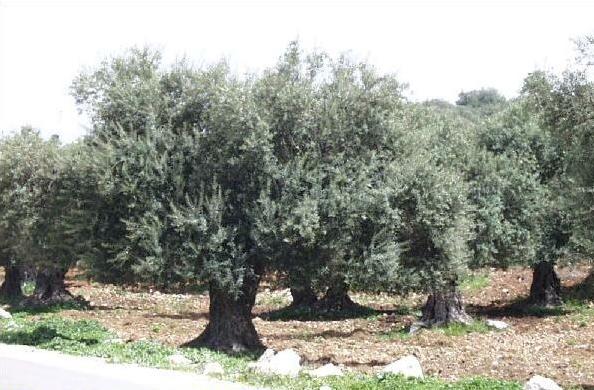
Albania to plant 20 million olive trees as demand doubles
Albania will plant 20 million olive trees countrywide, as the demand for new plants has doubled since 2008.
"The fivefold increase of the olive cultivation fund is one of the most ambitious promises of the government during the next four years. We should plant 20 million olive trees to pave the way to at least 30 million others in the coming years," Prime Minister Sali Berisha said in a statement.
In its 2009 budget, Albania allocated 104 million leke (750,000 euros) for olive-growing, out of a total 1.1 billion leke (7.9 million euros) for agriculture, Agriculture Minister Genc Ruli said (www.km.gov.al).
About 17,000 hectares have been identified that could be rehabilitated for the new trees. Of the total plantings, 65% will be local varieties and 35% foreign. (Balkans.com)
Manas Petroleum bets high on Albanian reserves
With Albania opening its doors for more foreign investment in oil sector, Manas Petroleum (OTCBB:MNAP) has already amassed assets in Albania. It now has one of the world’s largest onshore light oil exploration projects in Albania. It is (safely) in Europe and only 20 miles north of continental Europe’s largest oil field. According to the combined conclusions of super-major Shell and a French company, Coparex, one prospect has the potential to produce over 800 million barrels of light oil. But the project has grown much larger. The council of ministers recently ratified the production-sharing contract on the two former Occidental blocks to DWM Petroleum, a subsidiary of Manas, according to a press release.
Manas Petroleum claimed that it now has what it considers Albania's greatest exploration assets as it controls 100% working interest in 6 giant exploration blocks in Albania with a proven oil system. Work by US engineering firm Gustavson & Associates (They also have done work for America’s IRS, Department of Energy, the World Bank and companies like Conoco and Chevron) concludes the potential reserves exceeds a tremendous 3 billion recoverable barrels.
The prospects include conventional exploration targets involving sub-thrust hydrocarbon accumulations in fractured carbonates. These projects clearly have excellent economics as Gustavson estimates that the cost of production for any deep oil developed from Manas' light oil resource to be a mere $2 per barrel. In its assessment, Gustavson reported: "The probability of success for a wildcat well in a structural complex area such as this is relatively high (because) it is in a structurally favorable area (and) proven hydrocarbon source and analogous production exists only 20 to 30 kilometers away."
Manas expects drilling of this giant play to begin by mid-2010 with the drilling of an appraisal well at the Sphiragu discovery in blocks 2 and 3. The light oil is definitely there and equally as important Manas has put together a formidable geological team of top exploration managers from Shell, OMV and Occidental Petroleum to exploit the resource. Manas has spent significant time and money to get to this point and we believe they have the people and projects to make it a success and that the timing could not be better. The potential is astonishing and very real considering that the work done by Manas and their predecessors on the 6 exploration blocks adds up to more than 70 million dollars. (Courtesy: PRWeb)(Commodity Online)
Ahead of 2010 budget, Albanian PM says economy showing resilience
Albania's economy performed relatively well this year in some of the toughest economic times on record, the official ATA news agency quoted Prime Minister Sali Berisha as saying.
"The Albanian economy successfully managed to cope with the most severe crisis that Europe and the world has ever seen since 1930," Berisha told the government's strategic planning committee, which reviewed the 2010 budget before passing it to the cabinet and parliament for study.
"(This year) marked the greatest wage increase in the history of the country, and marked an increase in budgetary income of about 8% compared to last year."
Albania also showed its highest rate of increase in foreign investment at 59%, and sharpest rise in new infrastructure and public works, ATA quoted Berisha as saying.
The government statistics agency has estimated growth at 5.3% in the second quarter. According to the International Monetary Fund, which has urged the government to end fiscal stimulus and set realistic targets in the 2010 budget, the economy will show 2% growth in 2009.
Revising upwards its earlier forecast of 0.7% growth, the IMF said it had seen fairly strong Albanian economic activity in the first part of the year and a slowdown in the second. Albania held parliamentary elections in June.
Growth for 2010 is likely to be 3%, a relatively high number for Europe, the IMF's Albania section chief, Gerwin Bell, said in late October.
Bell welcomed sound macroeconomic policies in place for a number of years, which had allowed the government to build up a good fiscal position and allow a healthy financial system to take root.
He said the government should be realistic on budgetary income and expenditure.
"Moreover, a strong fiscal position, declining public debt and improving external position will be absolutely critical when Albania goes to international debt markets to finance," Bell said.
The IMF's latest three-year programme for Albania worth $27.9 million expired in January, and the government has said it has no need of a new accord.
Source: Balkans.com Business News
Praktiker Prepares to Open Albania’s First DIY Store
GERMANY - Praktiker AG, Germany’s second- biggest home-improvement retailer, said it will open the first do-it-yourself store in Albania, one of Europe’s poorest nations.
The outlet will open next month in the capital Tirana, Praktiker said in an e-mailed statement.
The Kirkel-based retailer has operations in nine countries outside Germany.
Albania, which applied this year to join the European Union, has 3.2 million inhabitants and a gross domestic product per capita of $4,006, according to the European Bank for Reconstruction and Development. About 90 percent of Albanians own a property and most houses need renovation, Praktiker said.
Praktiker postponed initial plans to open the store last year because of the global economic crisis. “The start in Albania will allow us, after the foreseeable end of the crisis, to further improve our market leading position in the region,” Chief Executive Officer Wolfgang Werner said in the statement. Besides its outlets in Germany and Luxemburg, Praktiker has operations in eight eastern and south-eastern European nations.
Eversheds wins role on €1bn Kosova motorways project
PRISHTINE - Eversheds has won a E1bn (£912m) infrastructure mandate in Kosovo as the country moves to improve transport connections with its neighbouring nations.
The 120km Morine to Merdare motorway project marks the largest investment by the Kosovo Government in 20 years and will connect the country with neighbouring Serbia, as well as Albania and the Adriatic coast. Eversheds won the mandate following an international tender in which it competed against firms such as the Italian arm of Orrick Herrington & Sutcliffe, as well as regional player Boga & Associates. Tirana-based partner Marco Lacaita is leading the Eversheds team, which also includes Milan partner Alvise Dona dalle Rose and Leeds construction partner Andrew Symms. The firm will advise the Kosovan Ministry of Transport and Telecommunications in drafting and negotiating all the relevant contracts for the project, which could last one-and-a-half years. Commenting on the appointment, Lacaita said Eversheds won the deal on the back of its launch in Tirana, Albania in April this year. The Tirana office had previously won mandates for the Albanian Government but this marks its the first appointment in Kosovo. Eversheds' Italian arm, Eversheds Piergrossi Bianchini, opened in Albania's capital Tirana in April this year and the office now has 10 lawyers.
The Morine to Merdare motorway project is expected to boost the local Kosovan economy by creating up to 3,000 jobs.
New oil development in Albania
HOUSTON, Oct. 8 – Stream Oil & Gas Ltd., Vancouver, BC, proposes a development plan under which it would assume operation within 12 months of Albania’s Cakran-Mollaj, Gorisht-Kocul, Ballsh-Hekal oil fields.
Upon approval and after funds are raised, Stream will undertake managed reservoir completions at some wells with a goal of at least doubling existing production of 470 b/d before mid-2010. Basic well workovers are sustaining and improving production. By the end of 2010, Stream plans to hike output at more wells and carry out technical planning for a waterflood at Gorisht and enhanced oil recovery projects at Cakran and Ballsh. Albania’s Albpetrol agreed to settle an accounts receivable of $1.1 million by providing Stream with additional crude oil for 3 months starting in October 2009. (alblink)
Subscribe to:
Posts (Atom)